Air Jordan
Air Jordans are a line of sports shoes created in 1984 by Nike for basketball champion Michael Jordan, considered one of the best players of all time. The name derives from his athletic skills and his aerial game, which made him famous throughout the world. Air Jordans are not just simple basketball shoes, but have become a cultural phenomenon, a symbol of style and success, an object of desire for millions of fans and collectors. In this article we tell you the history, characteristics and curiosities of these legendary sneakers.
The origins of the Air Jordan
The history of Air Jordan begins in 1984, when Nike, an American sports clothing and accessories company, decided to create a brand dedicated to Michael Jordan, a young and talented Chicago Bulls player who had just entered the NBA. Jordan was looking for a sponsor who could enhance his image and personality on the pitch. Initially, his dream was to collaborate with Adidas, but it was his mother, Deloris, who convinced him to go to the meeting with Nike. The company's offer was too tempting to refuse: $250,000 a year for five years, plus a percentage of shoe sales. Furthermore, Nike guaranteed him maximum creative freedom and the possibility of having an exclusive line in his name.
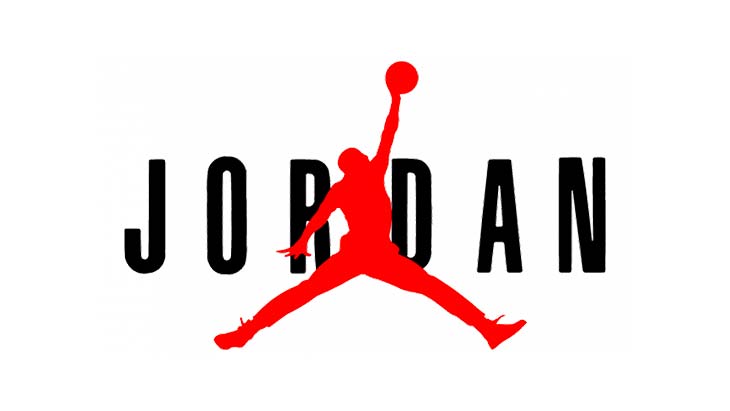
The Air Jordan brand was coined by Jordan's agent, David Falk, who was inspired by the nickname "Air" that the player had received for his spectacular dunks. The logo chosen was the Jumpman, which is the stylized silhouette of Jordan jumping with his legs apart and the ball in his hand. The first shoe model was designed by Peter Moore and was called Air Jordan I. It featured a high cut, a leather upper on which the large swoosh (the Nike logo) stood out and another logo dedicated to the Jordan line consisting of a winged ball and the word "Air Jordan" located near the neck of the shoe. As for the colors, the shoes were predominantly black and red, in homage to the Chicago Bulls.
The controversies and success of the Air Jordan
The Air Jordan I made their official debut on the market in March 1985, but even before that they had attracted a lot of interest and even some controversy. In fact, Michael Jordan had worn them during some games of the 1984-1985 season, violating the NBA rules which required players to wear white shoes or shoes with uniform colors to those of the uniform. For this reason, the league fined Jordan $5,000 every time he wore his "banned" shoes. However, Nike decided to pay the fines for him and used the opportunity to create a brilliant advertising campaign. The commercial featured images of the shoes with a voiceover saying, "On October 15, the NBA launched a revolution. It banned these shoes from the game. Luckily, the NBA can't stop you from wearing them." The message was clear: Air Jordans were the most rebellious, innovative and desirable shoes of the moment.
The strategy worked perfectly: the Air Jordan I sold 70 million dollars in the first two months and became a mass phenomenon. Jordan, for his part, confirmed his skills on the field, winning the Rookie of the Year award, participating in the All-Star Game and averaging 28.2 points per game. Nike therefore decided to continue the collaboration with the player and create a new model every year, inspired by his personality, his passions and his performances. Thus was born the series of 23 basketball shoes that made the history of Air Jordan, from 1985 to 2009. Each model had unique technical and stylistic characteristics, which made it different from the others and adapted it to the needs and tastes of Jordan and his fans.
The characteristics of the Air Jordan
Air Jordans were created to be the most cutting-edge basketball shoes on the market, both in terms of technique and design. For this reason, Nike brought in some of the best designers and engineers in the industry, such as Peter Moore, Tinker Hatfield, Bruce Kilgore, Wilson Smith III and others. Each model had peculiarities that distinguished it from the others and made it recognizable at a glance. Here are some of the most famous:
- The Air Jordan II was the first basketball shoe to have a suede upper and not have the Nike logo. They were also the first to be produced in Italy, to give a touch of elegance and quality.
- The Air Jordan III was the first to introduce the Jumpman logo in place of the winged football and to incorporate a visible bladder in the heel to improve cushioning. They were also the first to feature the famous "elephant print" motif on the toe and heel.
- The Air Jordan IV were the first to have holes on the upper to facilitate breathability and lacing. They were also the first to be sold on the international market and to be worn by Michael Jordan in the film "Space Jam".
- The Air Jordan V were the first to not have the Nike logo on the outside of the shoe, but only on the tongue and sole. They were also the first to have a translucent sole that glowed in the dark and reflective stripes on the heel.
- The Air Jordan VI was the first to have a hole in the heel to facilitate the fit and a padded tongue to protect the Achilles tendon. They were also the first to have two different colors for the right foot and the left foot.
- The Air Jordan VII was the first to have the Nike logo neither on the side nor on the sole of the shoe, but only the Jumpman on the heel and tongue. They were also the first to have graphics inspired by African art on the upper.
- The Air Jordan VIII was the first to have crossed straps on the upper for greater stability and a tongue with a flying carpet design. They were also the first to have a sole with a colorful geometric design.
- The Air Jordan IXs were the first not to be worn by Michael Jordan in an NBA game, but only during his short baseball career. They were also the first to have writing in different languages on the sole to represent the global spirit of the player.
- The Air Jordan X was the first to celebrate Michael Jordan's accomplishments with a list of his accomplishments on the outsole. They were also the first to have the metal Jumpman logo on the side of the shoe.
- The Air Jordan XI was the first to use Nike's patented material called "patent leather"
- The Air Jordan XII was the first to use Zoom Air technology for greater responsiveness and comfort. They were also the first to be inspired by a non-sporting object, namely the flag of Japan.
- The Air Jordan XIII was the first to feature a cat-paw outsole, a nod to Jordan's "Black Cat" nickname. They were also the first to incorporate a hologram on the heel that simulated the eye of a feline.
- The Air Jordan XIV were the first to be influenced by the world of racing cars, in particular by the Ferrari 550 Maranello. They were also the last to be worn by Jordan with the Chicago Bulls in 1998.
- The Air Jordan XV was the first to be designed after Jordan's retirement from the NBA. They were also the first to have a protruding tongue that resembled Jordan's mouth while playing.
- The Air Jordan XVI was the first to feature a removable upper that transformed the shoe from a high-top to a low-top. They were also the first to have a transparent sole with the Jumpman logo embossed.
- The Air Jordan XVII was the first to exceed $200 in price and to be sold in a metal briefcase. They were also the first to have a sole with a musical design that referenced Jordan's passion for jazz.
- The Air Jordan XVIII was the first to be inspired by classic Italian shoes, with a clean toe box and hidden tongue. They were also the last ones to be worn by Jordan in the NBA in 2003.
In addition to the numbered models, there are also other variations of the Air Jordans that have been successful over the years, such as the Air Jordan Dub Zero, the Air Jordan Spizike, the Air Jordan Son of Mars, the Air Jordan Future and more. Furthermore, there have been several collaborations with other brands, artists and designers that have given rise to limited and highly sought-after editions of the Air Jordans.
Air Jordan collaborations
Air Jordans have been the protagonist of numerous collaborations with other brands, artists and designers who have reinterpreted the design and style of the original sneakers. Some of the most famous are:
- Levi's: In 2008 and 2018, the denim brand collaborated with Nike to create denim versions of the Air Jordan I and Air Jordan IV.
- Off-White: the brand founded by Virgil Abloh has revisited several Air Jordan silhouettes, adding details such as zip ties, quotes and circular holes. Among the most famous are the Air Jordan I “Chicago” of 2017 and the Air Jordan V “Sail” of 2020.
- Comme des Garçons: The Japanese brand collaborated with Nike to create black leather versions of the Air Jordan I with buckles on the side and heel.
- Travis Scott: the American rapper gave his personal touch to the Air Jordan I, IV and VI, reversing the Nike logo on the side and adding hidden pockets on the collar of the shoe.
- Dior: The French high fashion brand has created one of the most exclusive and expensive collaborations in Air Jordan history, creating gray and blue leather versions of the Air Jordan I with the Dior logo on the side and sole.
The Air Jordan nei media
Air Jordans are not only basketball shoes, but have also become cultural icons, appearing in several films, TV series, video games and songs. Some examples are:
- Space Jam: the 1996 film that sees Michael Jordan team up with the Looney Tunes to challenge a team of aliens to basketball. In this film, Jordan wears the Air Jordan XI “Space Jam”, which has become very popular among fans.
- Do the Right Thing: the 1989 film directed by Spike Lee that tells the story of life in a multi-ethnic neighborhood in Brooklyn. In one scene, the Buggin' Out character gets angry when a white cyclist steps on his Air Jordan IV "White Cement."
- NBA 2K: the series of basketball video games that allows players to wear Air Jordans and unlock exclusive content dedicated to the brand.
- Nelly: the American rapper dedicated a song to Air Jordans in 2002, entitled “Air Force Ones”. In the text, Nelly says he wants “two pairs” of Air Jordans because he loves them.
Final considerations
Air Jordans are more than just basketball shoes: they are works of art, historical testimonies, expressions of style. They are the shoes that accompanied the career and life of Michael Jordan, the player who changed the world of basketball forever. They are the shoes that have inspired generations of athletes, artists and enthusiasts, who have collected, worn and admired them. They are the shoes that gave meaning to the concept of collaboration between sport and fashion, between culture and innovation. They are the shoes that made the history of sneakers and continue to do so today.