What are Walter Albini’s clothing lines?
Introduction
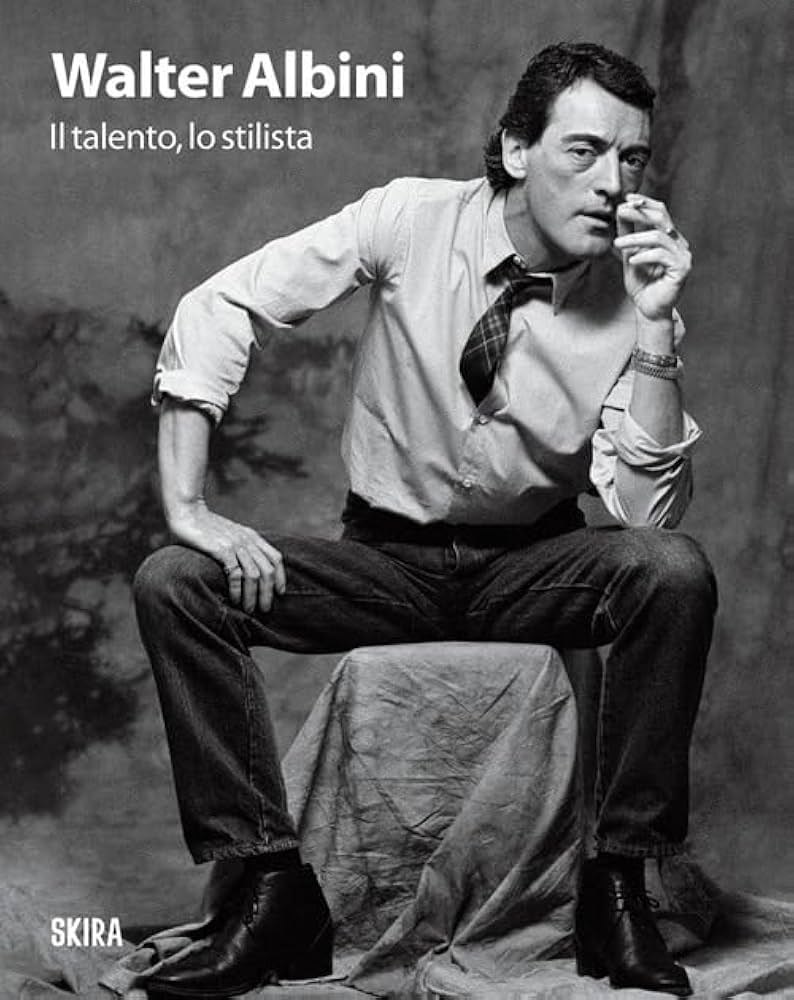
Walter Albini revolutionized the Italian fashion industry by introducing an innovative approach that combines haute couture and industrial production. Born in 1941 in Busto Arsizio, Albini studied art in Turin and gained international experience in Paris and London, marking his encounter with figures such as Coco Chanel and Karl Lagerfeld. His most relevant intuition was to bring creativity to the factory, guaranteeing quality and stylistic coherence to collections created on a large scale. With the birth of its lines, Albini has overcome the traditional separation between haute couture and ready-to-wear, creating a bridge between luxury and accessibility for a new audience of consumers.
1. Historical context and training
Walter Albini's path begins in the industrial fabric of Northern Italy, where from a young age he developed particular attention to materials and production processes. After graduating from the Academy of Fine Arts in Turin, he continued his training in Paris, working alongside Coco Chanel, who conveyed the cult of clean lines and timeless elegance. The meeting with Karl Lagerfeld at Courrèges opens up new perspectives on stylistic innovation and the use of technical fabrics. These international experiences forge the theoretical basis that Albini will apply in Italy, positioning himself as a mediator between craftsmanship and industrial production.
2. The first collaborations and the approach to ready-to-wear
In the late 1960s, Albini began collaborating with rising fashion houses such as Krizia, Cadette, Billy Ballo and Trell, as well as the famous American brand Cole of California. In these contexts he experiments with his first ready-to-wear collections, applying the concept of "functional fashion" which favors wearability, versatility and speed of production. His work with Krizia, in particular, highlights the ability to combine formal research and a commercial approach, anticipating seasonal trends. This consolidation phase leads Albini to define his own aesthetic language based on precise cuts and essential color palettes.
3. The concept of “Unimax”
In 1970 Walter Albini launched the Unimax project, a production philosophy based on uniformity of cut and color for men and women. The goal was to create basic garments, easily recognizable and usable on multiple occasions, breaking down the barriers between male and female aesthetics. This pioneering experiment demonstrated how a minimal design could find favor with the market without sacrificing sartorial rigor.
The Unimax proposal included color palettes reduced to primary nuances, easy-to-work fabrics and standardized models. Thanks to factory production, these garments were accessible in terms of price and available on a large scale, bringing Italian ready-to-wear to an international level. The success of Unimax marked a turning point in the industry, inspiring other designers to experiment with similar formulas.
4. The Registry Collection
The Anagrafe collection, also presented in 1970, was a true conceptual manifesto. Albini created eight brides dressed in powder pink and eight widows in black, creating a dramatic contrast between emotional sunrises and sunsets. Each look, accompanied by minimalist accessories, evoked stories of multiple identities and social masks.
Anagrafe aimed to spark reflections on the role of women in contemporary society, using fashion as a narrative medium. The light fabrics and geometric cuts gave an air of modernity deliberately distant from romantic clichés. The media coverage was strong, with dedicated reports in the main Italian and international fashion magazines.
5. The five coordinated fashion houses
To translate his vision into productive reality, Albini organized five companies specialized in different categories: women's clothing, menswear, knitwear, accessories and footwear. Each company branch maintained operational autonomy, but responded to a single creative direction, guaranteeing consistency of style and quality.
This innovative business model allowed the offer to be diversified without losing the brand's identity. Thanks to internal specialization, production times were reduced and the ability to react to market trends increased considerably. The system became a point of reference for other ready-to-wear realities in Italy.
6. The first personal line “Walter Albini” (1973)
In 1973 Albini presented his first personal collection in London, giving life to the eponymous brand Walter Albini. It adopts a dual strategy: a high-image line for selected retailers and a broader commercial distribution line. This distinction made it possible to build an aura of exclusivity without giving up a solid sales network.
The garments of the first personal line stood out for their essential cuts, sartorial details and fine materials such as virgin wool and textured silk. The choice to maintain competitive prices positioned the brand as a point of reference for a sophisticated but value-conscious public. London businesses enthusiastically welcomed the collection, opening the doors to the international market.
7. The total look
With the concept of total look, Albini no longer limits itself to clothing, but extends its signature to accessories, home textiles and design objects. These integrated collections proposed a unitary color language and a complete lifestyle vision. The idea was to offer the customer a 360-degree experience.
The photographic campaigns of those years showed domestic settings and shots of passers-by in urban contexts, highlighting the wearability of the garments and the aesthetic coherence. This approach contributed to consolidating Albini's image as a promoter of total fashion, in which the wardrobe reflected the individual's lifestyle.
8. Walter Albini Alta Moda (1975)
In 1975 the brand launched the first high fashion collection in Rome, renamed Walter Albini Alta Moda. Inspired by the 1930s and the taste of Coco Chanel, it features tailored coats, tweed suits and evening dresses full of refined details. This line expresses a combination of tradition and innovation, with artisanal embroidery and light structures.
The debut at Palazzo Colonna received great attention, with industry critics praising the balance between classical rigor and contemporary spirit. The exclusive events linked to the fashion show involved celebrities and jet set figures, consolidating the brand's reputation also in the Italian high fashion segment.
9. Materials, cuts and color palettes
Fabric research represents one of Albini's strong points. It uses extra-fine wools, natural silks, technical cottons and innovative fibres, combining them with efficient production processes. The cuts are characterized by strong lines, clean shoulders and sober silhouettes, in line with a minimalist aesthetic.
The color palette ranges from classic neutrals - black, grey, beige - to more intense touches of colour, such as burgundy and midnight blue. This choice allows the collections to be modulated according to the seasons and moods, always guaranteeing visual coherence and versatility of use. Accessories, often in contrasting shades, complete the looks with a touch of personality.
10. Cultural and media impact
Albini's lines don't just follow market trends, they define them. His fashion shows attract the attention of the international press, with reports in Vogue, Harper's Bazaar and L'Officiel. Articles praise his ability to combine timeless elegance and mass production.
In Italy, the media system valorises Albini's innovation as a driving force for the textile industry, highlighting the role of the designer as the creator of economic success. The specialized magazines dedicate in-depth analyzes on the techniques adopted and the industrial synergies implemented.
11. Contemporary testimonies and criticisms
Anna Piaggi described Albini as "an architect of fashion", underlining the importance of the global project. Fashion critics appreciated his formal discipline and systemic approach, while some conservatives accused him of having "mechanized" the art of tailoring. Despite the tensions, the majority of commentators recognized the innovative value of his lines.
The CSAC archives preserve sketches, samples and letters that testify to the meticulousness of his work. These documents today offer a privileged look at the creative process, highlighting the continuous search for balance between aesthetics and functionality.
12. The legacy in contemporary design
Albini's contribution continues to influence modern brands and designers. Many fashion start-ups adopt production and design strategies inspired by the Unimax model, focusing on minimalist capsule collections. Big brands, from Gucci to Prada, still cite Albini as a point of reference for total look formulas.
Fashion academies and design institutes include the study of his collections in their training programs, recognizing the historical and methodological importance of his work. The integrated approach between creativity and industry remains a paradigm for the training of new generations of stylists.
13. The relaunch of the brand (2023–2025)
In 2023 the Bidayat group acquires the Walter Albini brand and its archives, announcing an ambitious relaunch plan. According to rumors, the project would involve Alessandro Michele, former creative director of Gucci, to reinterpret the stylistic heritage in a contemporary key.
The first previews speak of a capsule collection that reinterprets iconic garments in sustainable materials and revisited cuts, with a focus on eco-friendly textile technologies. This new chapter aims to bring Albini's sober elegance back to the center of the international fashion debate.