Vogue
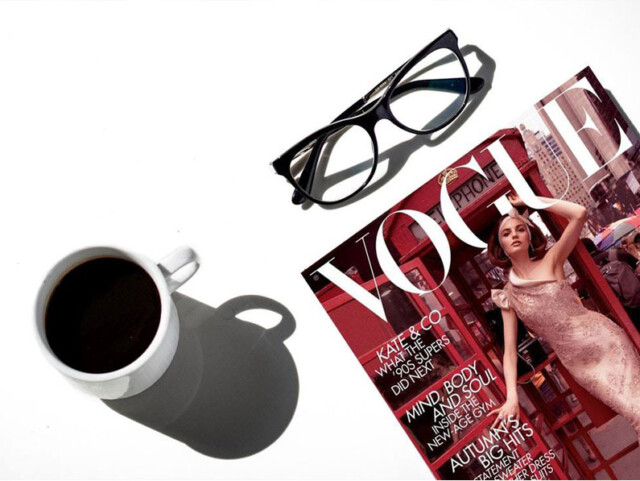
It is considered the Bible of fashion, dictates the style in vogue at all times and its current director is an authentic icon of the star system who even inspired the creation of a film. The colorful world of fashion would not exist without Vogue, a monthly periodical born at the end of the nineteenth century by Arthur Baldwin Turnure and which became famous throughout the world thanks to the subsequent acquisition of Condé Montrose Nast.
The history of Vogue is that of a magazine capable of reinventing itself, of rising from its ashes gradually becoming indispensable for fashion enthusiasts; yet, the magazine is not limited only to illustrating catwalk life, but is always in step with the desires of ordinary people who want to feel unique without squandering their salary.
Structure of the journal
The monthly Vogue is essentially structured into three macro-areas:
- Front of the Book (FDL): inside we find various types of columns (food, health, beauty and fitness), as well as articles focused on fashion and cultural news;
- Centro del Libro (CDL): also known as “Pozzo“, this section alternates fashion and interviews with industry figures or celebrities. Also included in this section are related stories of home and garden photography and cultural articles;
- Back of the Book (RDL): space dedicated to shopping, with a column Addresses and advice for purchasing garments and/or accessories selected by the editors of Vogue.
To these three main sections is added the column Ultimo Sguardo which focuses in particular on a single fashion accessory. The CDL is the only section of the monthly magazine not interspersed with advertising pages.
History of Vogue
It was 1892 when Arthur Baldwin Turnure founded Vogue in New York. The magazine, initially conceived as a weekly magazine aimed mainly at upper-class New Yorkers and having both a male and female target, included columns designed to satisfy all "palates": Elegant fashion at a good price, The elegant man, Worldly gossip, For the lady of the house.
The relaunch of the magazine took place, however, in 1909, when Vogue changed publisher, passing from the hands of Turnure to the more capable ones of Condé Nast . Since 1910, many aspects regarding the use and composition of the magazine have changed: Vogue begins to appear on a biweekly basis, increasing the number of pages and the price and reducing the target audience to the fairer sex only.
The increase in copy circulation - also due to the fact that the magazine contained a greater number of advertising pages - convinced the new publisher to launch Vogue in the world. The magazine thus became international: in 1916 the English edition was launched, followed by the Spanish one (which, however, was not very successful), French and the unsuccessful German edition.
After various events linked to the publisher's choice to list Vogue on the stock exchange, Condé Nast dies. It is 1942 and it is up to the latter's trusted collaborator, Iva Sergei Voidato Patcévitch, to take over the reins of the magazine. In 1959 the Newhouse family came into play: it was Samuel I. Newhouse Sr, president of Advance Publications, who obtained 46% of Condé Nast Publications, subsequently obtaining the entire share capital of the magazine.
In 1972 Vogue changed its skin again, becoming a monthly and significantly increasing its circulation.
Vogue currently boasts 21 editions spread around the world and translated into various languages, from English to Italian through Chinese, French, Spanish, etc.
Visit the Vogue website: vogue.com
The guidelines
Seven women, seven directors, seven visions of the magazine, also conditioned by the historical period in which they lived and worked: since its genesis Vogue has received the honor of being managed by seven natural leaders, who have given their readers not only a leisure magazine, but an authentic vademecum on the latest trends in style and elegance.
The first director of the magazine was named Josephine Redding, at the time responsible for the women's section dedicated to the magazine; in 1909 she was succeeded by the sister of the widow Turnure Marie Harrison , fired by Condé Nast following the lawsuit which pitted the new publisher against Mrs. Turnure. Harrison paid the price for siding with her sister.
The third director of Vogue was Edna Woolman Chase, who in 1914 took over the reins of the magazine, immediately giving it her personal stamp. A rather rigid and demanding woman, Chase has a very long apprenticeship with the magazine behind her. Edna Woolman Chase imposes on its employees a sober and essential outfit , in line with the magazine; Furthermore, the woman was known for her ruthless advice regarding fashion trends.
Chase was responsible for organizing the first charity fashion shows, in which she usually involved famous stylists and rich New York ladies to plead the cause of women and children suffering due to the First World War. Edna Woolman Chase retired in 1951.
When Chase leaves the scene, Jessica Daves (1952) takes over. Not initially considered suitable for the role of director of a fashion magazine, Daves decided to involve the art director of Vogue Alexander Lieberman, entrusting him with the task of taking care of the graphic part of the magazine. Despite being a conservative in terms of style, Jessica Daves is remembered for her ability to balance her vision of fashion with the accessibility of some garments even to the middle-class.
The fifth director of Vogue is Diana Vreeland (1962), unscrupulous and innovative. Under his aegis Vogue takes on more provocative and sensual contours; even the vision of the fashion universe changes, becoming more similar to a real show, an other universe into which to ferry one's readers. In 1971 Vreeland was followed by Grace Mirabella, who dressed her creature in a new skin - yet another.
The management of Mirabella makes Vogue a magazine closer to the reality experienced by a society, that of the Seventies, moved by tumults that were nothing short of revolutionary. Women are starting to work, they demand the same equal rights as men, they are looking for garments they can wear every day, clothes that are practical and fashionable at the same time.
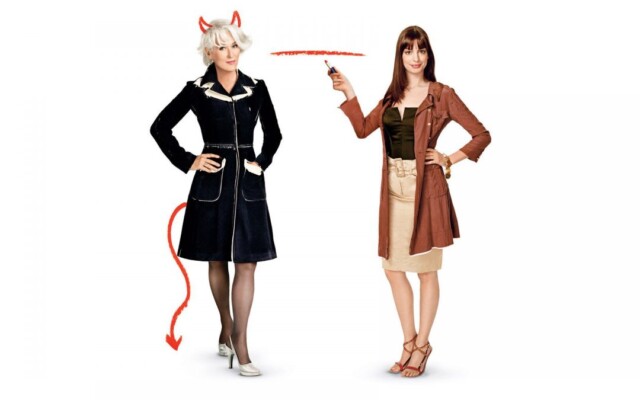
Under the direction of Grace Mirabella Vogue becomes monthly; Furthermore, inside there is ample space for pages dedicated to beauty and health advice. In 1988 she crossed the door of Vogue: the living legend, the style icon, the “devil who wears Prada“: the English Anna Wintour!
The current director of Vogue is seen by insiders and beyond as a sort of mythological creature. Since her debut behind the desk, Anna Wintour has made important changes to the magazine, starting right from the cover. The cover of the monthly shows the model in full, highlighting the clothes worn and proposing solutions within the reach of every pocket.
Vogue is no longer an elitist magazine for rich and bored women, but a magazine capable of combining luxuryry and contemporary fashion, of celebrating the beautiful and the creative, of enhancing the individuality of each of its readers. As Wintour likes to argue, Vogue is no longer a magazine: it is a brand.
The aesthetics of Vogue
Even the eye wants its part and the Vogue team, decade after decade, has always been aware of this. This is why every aspect of the monthly magazine has been taken care of in every detail , from the cover to the last page. Nothing was left to chance and many well-known names in art and fashion were involved during the evolution of the magazine.
The covers
The history of Vogue is also marked by the design of its covers. After all, a convincing cover is needed to entice the reader to purchase and every personality who has contributed to making the magazine great in the world knows this.
The first covers randomly alternated photos, illustrations and prints. The arrival of Condé Nast gives a boost to the layout of the cover. The new publisher opts for color covers, created by a few illustrators, to make the style proposed by the magazine recognizable; Consé Nast also requires that the word Vogue be included in the design.
Each cover of the magazine tends to promote the artistic movement in vogue in a specific period, at least until the thirties, when the cover of Vogue takes on more "photographic" connotations. In 1932 Vogue was published with a photographic cover by Steichen : a color shot of a girl in a costume. This stylistic choice kicks off a new phase of the magazine, which features photographs of models on the cover.
In the Sixties portraits of models winked sensually at readers; great emphasis is given to the face, the gaze, the lips of the chosen “cover girl”. Wintour introduces the cover which portrays the full figure of the model, placing particular emphasis on the outfits worn.
The logo
TheVogue logo has undergone some transformations over the years. The first, created by Harry Mc Vickar, is composed of two reclining women and is usually placed in the upper part of the cover.
In January 1907 the whole word Vogue appeared, placed on the cover as an entablature above two columns. As with the composition of the covers, the publisher Condé Nast also plays a key role in the insertion of the logo in the overall design, asking the editors to insert the word Vogue in the color illustration, changing the graphic appearance as desired.
Forty years later it will be Alexander Liberman who creates the current logo of Vogue.
The artists involved
Illustrators, artists and photographers have contributed to the cause of Vogue.
In the first ten years of the magazine's life, sacred monsters of art and illustration such as Salvador Dalì, Georges Lepape and Eduardo Garcia Benito put their signature on the monthly magazine. There is no shortage of subsequent photographic contributions by professionals such as Adolphe de Mayer (who signed an exclusive contract with the monthly magazine), Edward Steichen, Cecil Beaton, Horst P. Horst, Toni Frissel, André Durts, Irving Penn, William Klein, Richard Avedon, Bruce Weber, Annie Leibovitz and Helmut Newton.
Vogue Italia
Among the various editions of Vogue in the world, the local one could not be missing.
Vogue Italia was born in 1962 from the ashes of Novità, purchased by Samuel Irving Newhouse's Condé Nast. The magazine retained its first name until 1965, the year in which it changed its name to Vogue & Novità under the lightning-fast direction of Consuelo Crespi.
In 1966 Crespi was succeeded by Franco Sartori, who changed the name of the magazine to Vogue Italia. Not just the name: Sartori makes numerous stylistic changes and not only to the monthly magazine, from the change in paper format to the involvement of big names in world photography to make the magazine more refined and enjoyable.
Upon Franco Sartori's death in 1988 it was up to Franca Sozzani to take up the heavy but wonderful legacy of Vogue Italia. Under his aegis, the magazine accentuates its sophisticated character and shows itself to be increasingly attentive to the needs of its readers. Sozzani died in 2016 and Vogue Italia passed under the careful leadership of Emanuele Farneti, director until 2021 (replaced by Francesca Ragazzi).
Vogue Italia comes out with the usual twelve annual issues and with important attachments: Vogue Unique, focused on luxury (March and September); Casa Vogue, on designer interiors (April and October); Shopping in Vogue (February and August); Beauty in Vogue (May and November).
Visit the Vogue Italia website: vogue.it
Filmography
Vogue was a source of inspiration for the creation of a successful film and a documentary centered on the figure of Anna Wintour.
- The Devil Wears Prada by David Frankel, 2006
- The September Issue di J. R. Cutler, 2009 – docu-film