Yves Saint Laurent
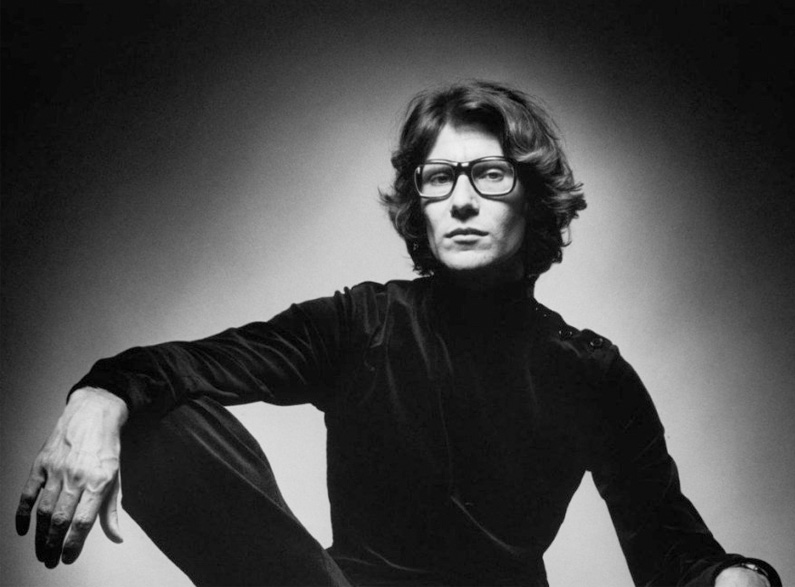
Yves Saint Laurent was one of the greatest and most influential designers of the 20th century, capable of transforming fashion into art and giving women new freedom and confidence through his clothes. Born in Algeria in 1936, he moved to Paris at 18 to follow his passion for drawing and couture. Here he joined the prestigious fashion house Dior, of which he became artistic director after the death of the founder. In 1962, together with his partner and partner Pierre Bergé, he launched his eponymous brand, which marked the history of fashion with its innovative and original collections.
In this article, we will retrace the life and works of Yves Saint Laurent, his sources of inspiration, his muses, his iconic pieces and his legacy in the world of fashion.
The life and works of Yves Saint Laurent
Yves Saint Laurent grew up in a villa on the Mediterranean with his two sisters Michelle and Brigitte, for whom he designed clothes since he was a child. In Paris, he attended the Chambre Syndicale de la Haute Couture, where his designs attracted the attention of Michel De Brunhoff, editor of French Vogue, who introduced him to Christian Dior. Yves Saint Laurent became his assistant and then his successor at the helm of the Dior house, where he stood out for his elegant and modern style.
In 1960, he was forced to join the French army for the Algerian war of independence, but after a few days he was hospitalized for stress and depression. Around this time, he also received the news of his dismissal from Dior, which led to a psychological crisis. However, thanks to the support of her partner Pierre Bergé, she managed to win a case against Dior and found her own fashion house.
The first collection by Yves Saint Laurent was presented in 1962 on rue Spontini in Paris and was an immediate success. The designer demonstrated great creativity and originality, interpreting the trends of the time with a personal touch. Among his sources of inspiration were art, culture, travel, cinema and literature. Some of his most famous collections were those dedicated to the Russian Ballet, Pop Art, Mondrian's paintings, the works of Picasso and Proust.
Yves Saint Laurent was also a pioneer of prêt-à-porter, or ready-to-wear fashion, which he made accessible to a wider audience. In 1966, he opened his first Rive Gauche boutique in Paris, followed by others around the world. Here he proposed clothes that were more casual and practical than haute couture, but always refined and sophisticated.
The muse of Yves Saint Laurent
Yves Saint Laurent always surrounded himself with beautiful and fascinating women, who were his muses and friends. Among these, we remember:
- Betty Catroux: tall, blonde and androgynous, she was considered the designer's twin sister. It was she who inspired the famous women's tuxedo, one of Yves Saint Laurent's most revolutionary garments.
- Loulou de la Falaise: niece of the Marquise Luisa Casati, she was an eclectic and creative woman. She collaborated with the stylist as a jewelry and accessories designer, and was one of his most faithful confidants.
- Catherine Deneuve: icon of French cinema, she was the spokesperson for Yves Saint Laurent for many years. The designer designed her clothes for the film Belle de Jour by Luis Buñuel, which became symbols of elegance and seduction.
- Laetitia Casta: model and actress, she was one of Yves Saint Laurent's last muses. The designer chose her for her Mediterranean and sensual beauty, and dedicated his last collection to her in 2002.
Yves Saint Laurent's iconic garments
Yves Saint Laurent ha creato molti capi che hanno segnato la storia della moda e che sono diventati dei classici intramontabili. Among these, we can mention:
- The women's tuxedo: presented in 1966, it is a male suit revisited in a feminine key, which expresses power, elegance and sensuality. Yves Saint Laurent called it “my manifesto”.
- The Mondrian dress: inspired by the geometric and colorful paintings of the Dutch painter Piet Mondrian, it is a jersey sheath dress from 1965 that combines fashion and art in a brilliant way.
- The trench coat: reinterpreted in 1962, it is an originally military garment that becomes a symbol of style and refinement. Yves Saint Laurent offers it in various colors and materials, to match with hats and sunglasses.
- The Saharan: launched in 1968, it is a cotton jacket with four pockets and a belt at the waist, which recalls exotic travel and adventure. Yves Saint Laurent also wore it, becoming his trademark.
- The trouser suit: introduced in 1967, it is a women's outfit consisting of a jacket and trousers, which expresses a new dynamic and professional femininity. Yves Saint Laurent declined it in various colors and patterns.
The legacy of Yves Saint Laurent
Yves Saint Laurent retired from the scene in 2002, after presenting his last collection at the Center Pompidou in Paris. He died six years later, at age 71, from a brain tumor. His passing was greeted with great emotion by the world of fashion and culture, who recognized him as one of the greatest creative geniuses of the century.
His legacy is still present and visible today in contemporary fashion, which is often inspired by his clothes and style. His maison continues to live under the creative direction of Anthony Vaccarello, who respects its original spirit but updates it with a modern and bold touch.
His life and works have also been celebrated with exhibitions, books and films. Among these, we remember the documentary L'amour fou from 2010, which tells her love story with Pierre Bergé and their art collection; the film Yves Saint Laurent of 2014, directed by Jalil Lespert, which traces his career from Dior to his maison; the film Saint Laurent of 2014, directed by Bertrand Bonello, which focuses on the most turbulent period of his life between the Sixties and Seventies.
Final considerations
Yves Saint Laurent was a designer who changed fashion and society with his creations. He was able to interpret women's desires and aspirations, giving them clothes that expressed freedom, security and beauty. He also knew how to transform fashion into art, expressing his personality and his vision of the world. He was also able to collaborate with other artists, such as the photographer Helmut Newton, the painter Andy Warhol, the musician Serge Gainsbourg and the singer Françoise Hardy. Yves Saint Laurent was, in short, a complete and unique artist, who left an indelible mark on fashion and culture.